1 DOLLAR SALE - Shop my products for only $1 - Each product automatically discounted to $1 or the equivalent of your local currency at checkout! (Please note that taxes and payment processing fees may be added at checkout). If the code is not applied at checkout, please use code 1DOLLARSALE. SHOP HERE
Turn Simple Creative Projects Into Multiple Online Income Streams With Free And Affordable Resources
This site includes links from a number of different affiliate programs. When you click on a link and make a purchase, we may earn a commission.
Best Free Ways to Earn From Affiliate Marketing
Affiliate marketing can feel overwhelming - so many tools, so many “gurus,” so many ads telling you what works. The truth is, you don’t need to spend a cent on advertising to earn real income. What you need is clear, practical steps, consistent effort, and a way to guide people from first learning about you to taking action. That’s where a simple sales funnel comes in.
A sales funnel is just the path someone takes from discovering your content to using a product you recommend. Even a small funnel can significantly increase your earnings. For example:
Free content or lead magnet – A blog post, checklist, or short video that solves a specific problem.
Email follow-up – A few emails providing tips, personal experience, and guidance.
Affiliate recommendation – Naturally included as part of helping them solve their problem.
Even a simple funnel - one lead magnet, a short email sequence, and 2–3 blog posts - can turn steady effort into earnings without spending on ads.
Below are the most practical, free ways to earn from affiliate marketing, with examples and tools you can start using today.
1. Focus on One Specific Problem
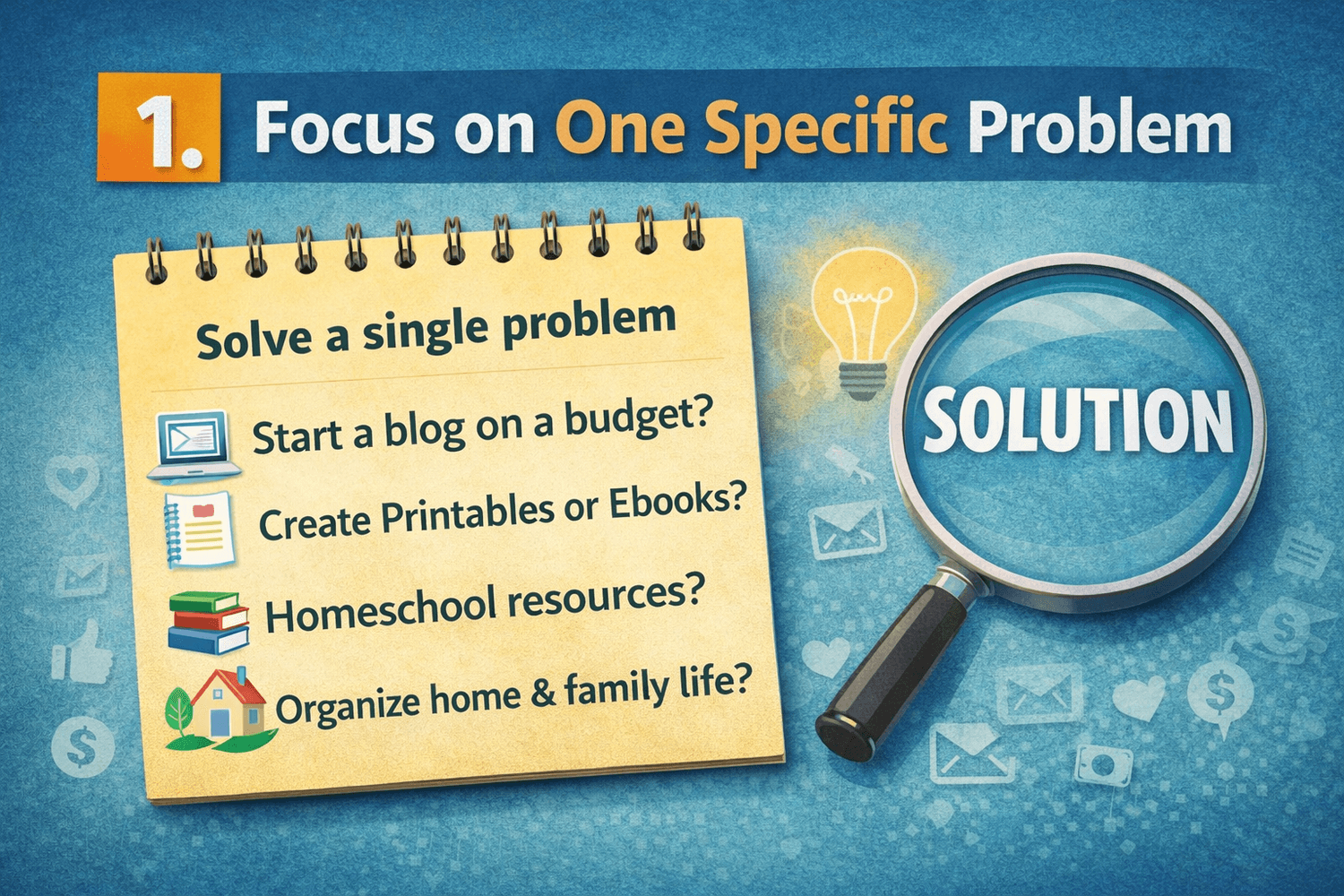
Affiliate marketing works best when your content has a clear focus. Don’t try to promote everything to everyone.
Examples of niches/problems:
Helping beginners start a blog or website without spending money
Creating digital products like printables or ebooks
Sharing homeschooling resources or creative tools for kids
Organizing home life efficiently or managing family schedules
Once your topic is clear, the products you recommend are obvious. You are not selling randomly - you are pointing people to tools that solve a problem they actually have.
Action step:
Pick a single problem area (e.g., “Starting a blog without tech experience”).
List 3–5 free or low-cost tools that help (e.g., WordPress for hosting, Canva for design, Systeme.io for email).
Share honest examples or screenshots showing how the tools work.
2. Blogging: Build a Long-Term Free Traffic Source
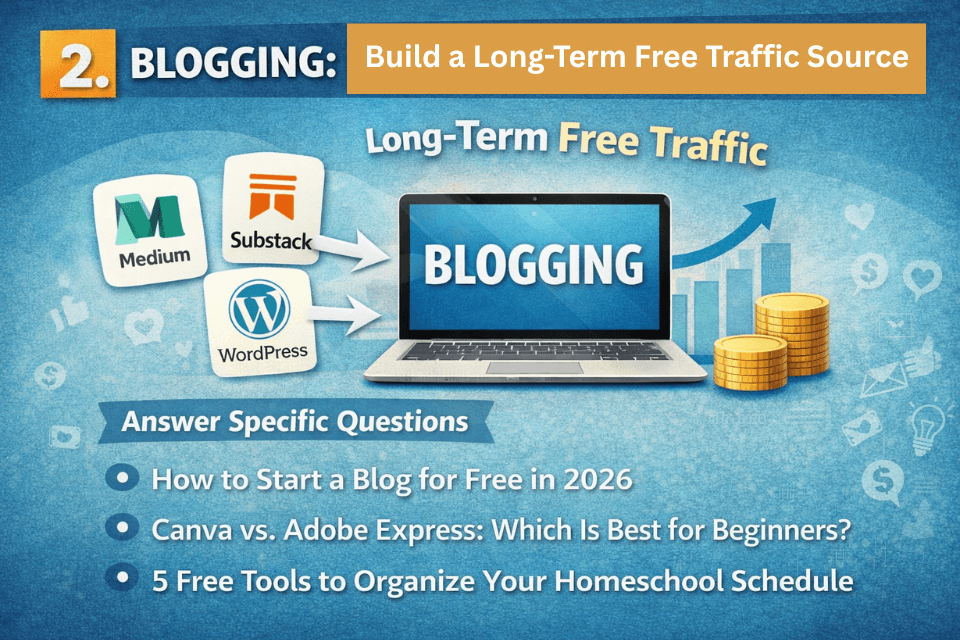
Blogging is still one of the most reliable ways to earn from affiliate marketing. The trick is to focus on content that answers specific questions people are searching for.
Where to blog:
Medium – Free, easy to get started, with a built-in audience
Substack – Combines blogging with email distribution, great for building a list
Self-hosted WordPress (or similar) – Full control, flexibility, and space for affiliate links
Example blog posts:
“How to Start a Blog for Free in 2026”
“Canva vs. Adobe Express: Which Is Best for Beginners?”
“5 Free Tools to Organize Your Homeschool Schedule”
How this fits into a funnel:
Each post solves a small problem and includes a lead magnet (checklist, mini-guide, template).
People sign up for the lead magnet, entering your email funnel.
Follow-up emails naturally guide them toward affiliate tools that help solve their problem.
Even a single, well-written post can bring traffic for years, and all without ads.
3. Video: Build Trust Quickly
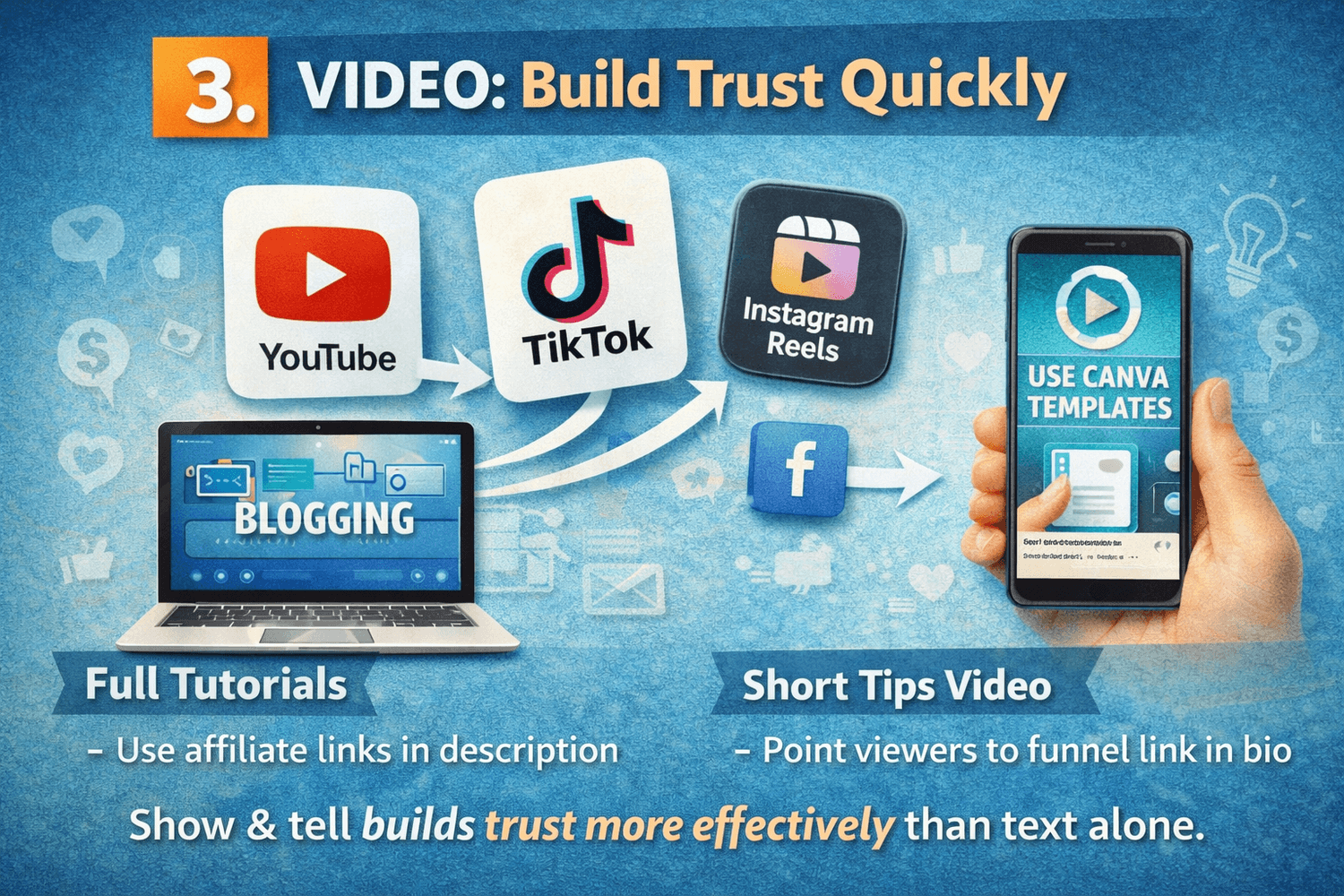
Video lets people see and hear you, which builds trust faster than text alone.
Platforms and examples:
YouTube: Full tutorials, tool reviews, or step-by-step guides. Example: “How I Set Up My First Email List for Free” with links to Systeme.io and Canva in the description.
TikTok / Instagram Reels / Facebook: Short tips or mini tutorials. Example: 30-second clip showing how to use a Canva template, then direct viewers to your bio link for the full tutorial.
Tip: YouTube allows direct affiliate links in descriptions. Short-form platforms mainly drive people to your funnel via your bio link.
4. Bio Links: Organize Your Recommendations
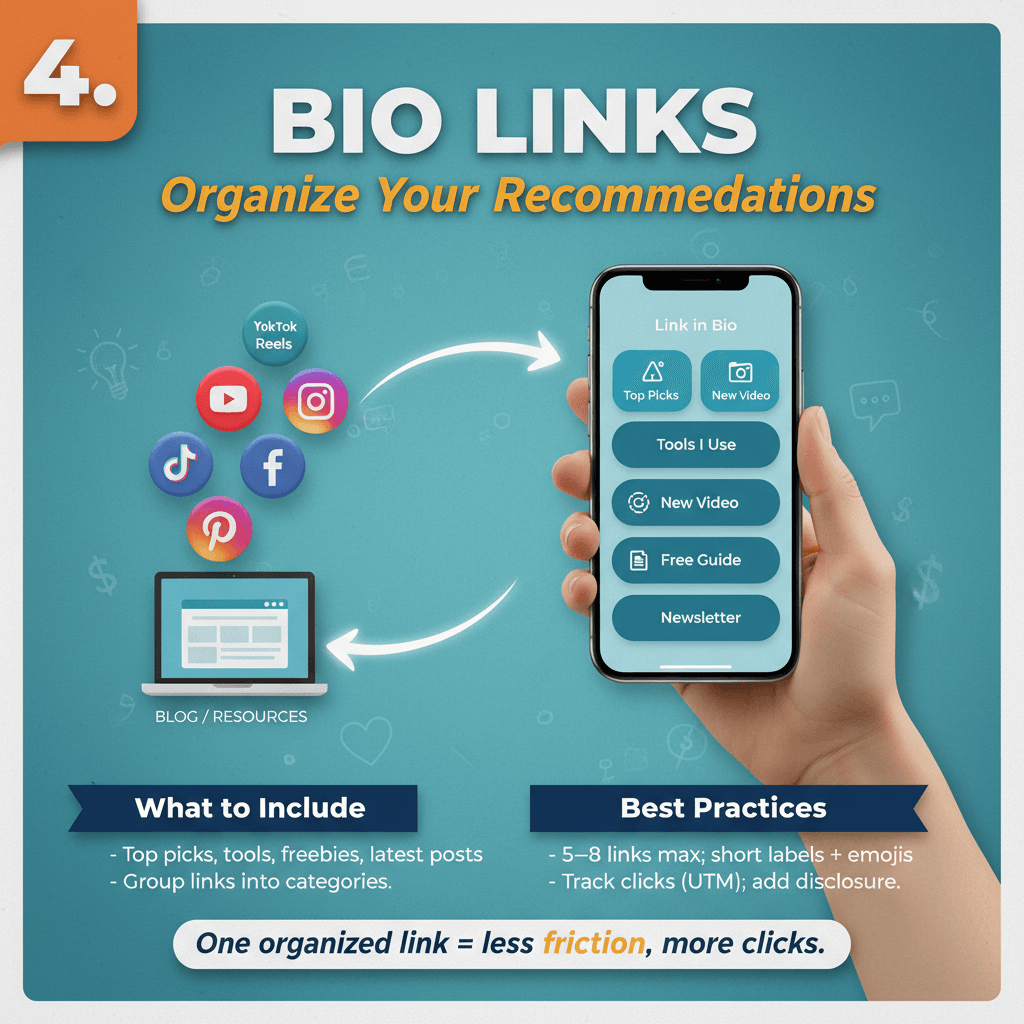
A single, well-organized bio link makes it easy for people to find what they need.
Tools:
Beacons or Linktree – Clean, organized lists of affiliate tools
Use headings like:
“Start Here” → Free guide or checklist
“Tools I Recommend” → Canva, Systeme.io, WordPress
“Learn More” → Blog posts, tutorials, or videos
The goal is clarity. People shouldn’t have to guess what to click. This also strengthens your funnel by pointing them toward your lead magnet first.
5. Pinterest: Evergreen Search Traffic
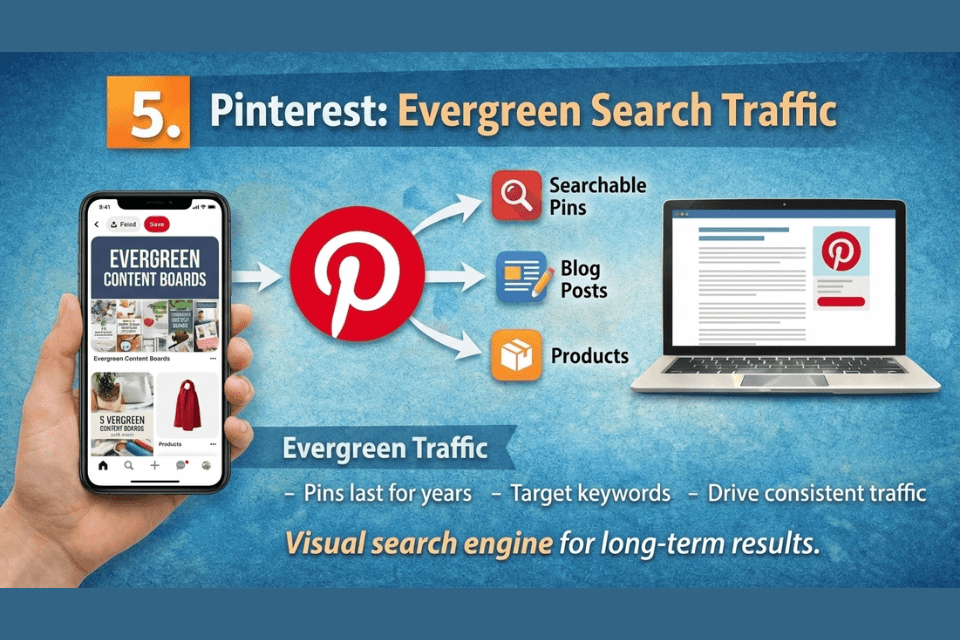
Pinterest is less social media and more a search engine, which makes it excellent for affiliate marketing.
Example strategy:
Create a blog post: “5 Free Tools to Start Your First Blog”
Make 3–5 pins pointing to the post with clear titles and visuals
Include affiliate links in the blog post (not directly on Pinterest)
Create new pins monthly for different posts
Even 10–15 pins per month can steadily grow traffic over time.
6. Curated Recommendation Platforms
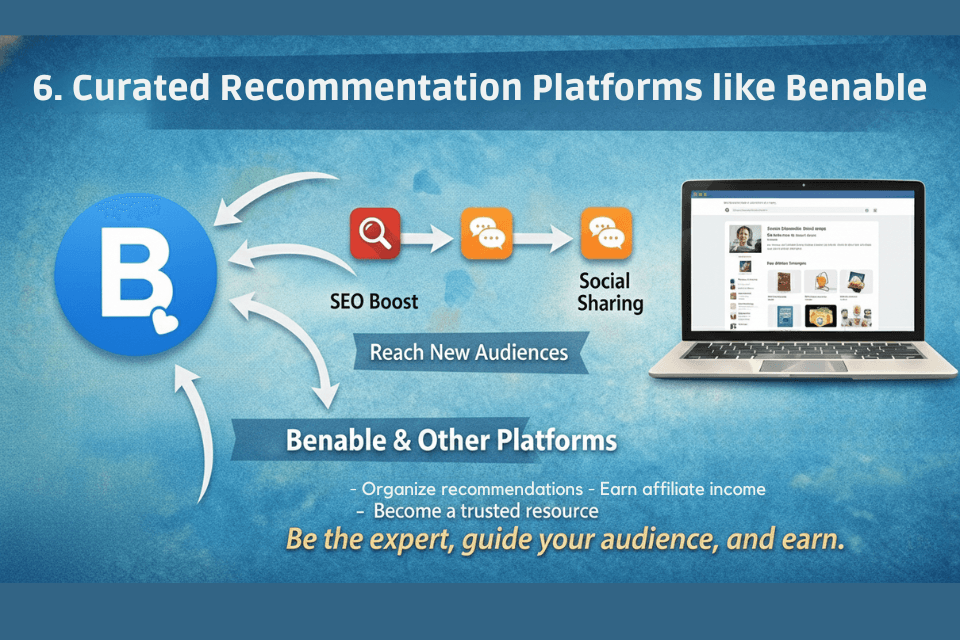
Platforms like Benable allow you to create curated lists of affiliate resources.
Example:
“Free Tools for Beginners to Start a Blog”
Include your top recommendations: Canva (design), Systeme.io (email), WordPress (hosting)
Share the link on social media, your video content, or in emails
Curated lists give people confidence and make them more likely to click your links.
7. Build a Small Email List
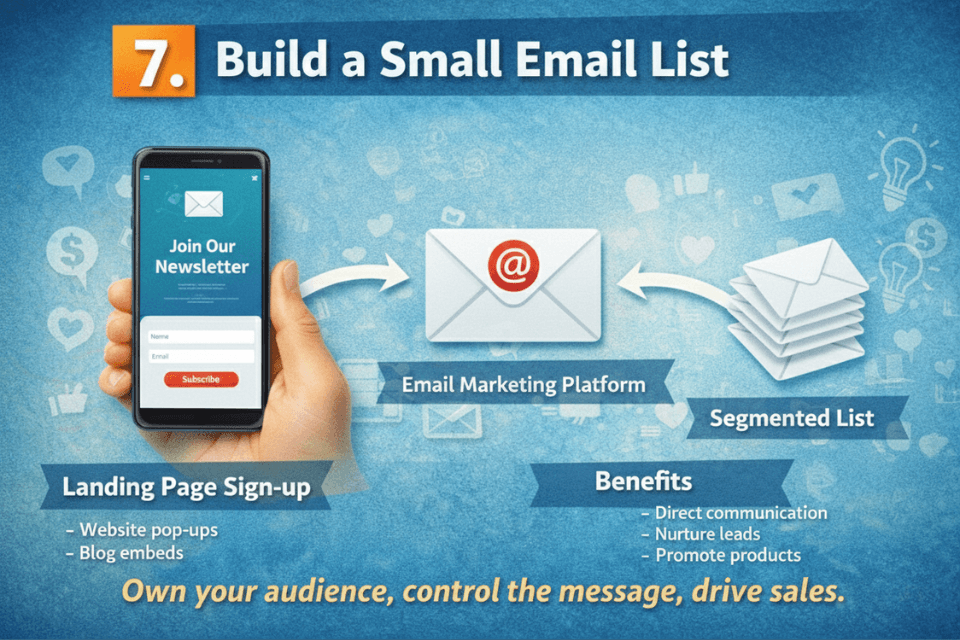
Even a small email list is more valuable than hundreds of social media followers.
How to start:
Offer something useful: a checklist, mini-guide, or swipe file
Example: “7-Step Checklist to Launch Your First Blog for Free”
Send 3–5 emails guiding people through the steps, including gentle affiliate recommendations
Email lets you guide people through your sales funnel naturally. You’re helping them, not selling directly.
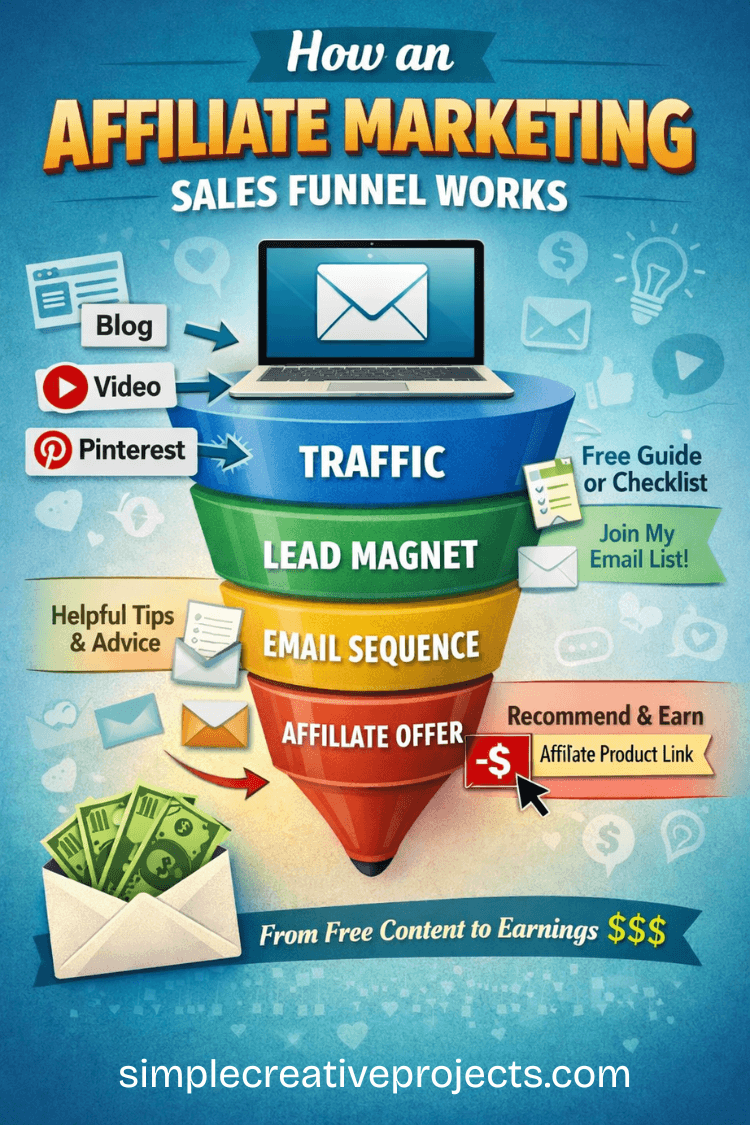
How a Sales Funnel With an Email List Works
A sales funnel is simply the path someone takes from first discovering you to taking an action - like using an affiliate product you recommend. An email list is the tool that lets you guide them along that path consistently and personally.
Think of it like this: the funnel turns casual visitors into people who trust you, and trust leads to action.
Here is the process:
Step 1: Top of Funnel – Awareness
Goal: Introduce yourself and provide value without selling.
This is where someone first discovers you. Free content is the best way to attract people.
Examples:
Blog posts: “How to Start a Blog for Free”
Short videos: 30-second TikTok showing a tip or tool
Pinterest pins: Visual guides linking to your blog or lead magnet
At this stage, people may not know you, but they’re interested in the solution you provide. You’re planting the first seed of trust.
Step 2: Lead Magnet – Capture Email Addresses
Goal: Move people from casual visitors to subscribers.
Once someone finds your content helpful, you offer a free resource in exchange for their email. This is your lead magnet.
Examples:
A checklist: “7 Steps to Launch Your First Blog for Free”
A mini-guide: “How to Use Canva to Create Printable Templates”
A template or swipe file: “Free 5-Day Social Media Plan”
How it works:
You place a simple signup form on your blog, video description, or Pinterest post.
Visitors enter their email to receive the resource.
Now they’re in your email list—you can start guiding them.
At this stage, your focus is still helping, not selling.
Step 3: Email Sequence – Nurture and Build Trust
Goal: Guide your subscribers from curiosity to confidence in your recommendations.
Once someone joins your list, you send a series of emails - often 3–7 in a short sequence - sharing helpful tips, insights, or examples.
Example 3-email sequence for a beginner blogger:
Email 1 – Welcome & Free Guide:
Deliver the lead magnet
Share one personal tip or step they can implement immediately
Email 2 – Value & Experience:
Teach something small (e.g., “How I structured my first blog post”)
Include a subtle affiliate link: “I recommend using WordPress to host your site - it’s easy to set up”
Email 3 – Deeper Guidance & Product Recommendation:
Share your experience using a tool or resource (affiliate product)
Explain clearly who it’s for and how it solves a problem
End with an invitation to try it if it fits their needs
Key point: Emails should educate, not sell. Affiliate links are part of the guidance, not the focus.
Step 4: Middle of Funnel – Additional Value
Goal: Offer more content or support to strengthen trust.
Not everyone buys or clicks right away. Your email list lets you continue to guide people naturally.
Examples:
Invite them to a video tutorial: “Watch how I set up my blog in 15 minutes”
Link to a detailed blog post or comparison guide
Offer additional free resources or tips
At this stage, people start to see you as an authority and someone who provides real solutions.
Step 5: Bottom of Funnel – Affiliate Recommendation
Goal: The subscriber takes action on your recommendation.
After building trust, you can share affiliate products naturally. Because you have guided them through helpful content, the link is part of the solution, not a sales pitch.
Examples:
“I’ve tried several email tools, and Systeme.io worked best for me as a beginner. Here’s how to set it up…” (affiliate link)
“Canva helped me create my first printable in minutes. You can try it free here…” (affiliate link)
“This WordPress hosting plan is free to start and made launching my site simple…” (affiliate link)
The key is context and honesty. You recommend the product because it solves their problem.
Step 6: Repeat and Upsell Naturally
Goal: Provide ongoing value and continue earning.
Your funnel doesn’t end after one recommendation. You can:
Send follow-up emails with new tips
Share advanced tutorials or free tools
Recommend additional affiliate products that fit their needs
Over time, even a small email list can earn consistently because you’re nurturing relationships, not chasing random clicks.
Why This Works Without Ads
Organic traffic feeds the funnel: Blog posts, video, Pinterest, and curated links bring people in naturally.
The email list is your direct line: You don’t rely on social media algorithms.
Trust drives clicks: People act because they see value and guidance, not because you’re pushing a product.
Assets compound over time: Blog posts, videos, pins, and email sequences continue to earn for months or years.
| Funnel Stage | Content / Tool | Action |
|---|---|---|
| Top | Blog post: “How to Start a Blog for Free” | Visitor reads post, sees lead magnet offer |
| Lead Magnet | “7-Step Blog Checklist” | Visitor signs up with email |
| Email 1 | Welcome & Deliver Checklist | Introduce yourself, guide next steps |
| Email 2 | Step-by-step guidance | Subtly mention affiliate tool (WordPress) |
| Email 3 | Deeper recommendation | Share detailed tutorial or review with affiliate link |
| Follow-up | Optional tips, free video tutorial | Continue building trust, recommend other tools |
Closing Thoughts
Earning from affiliate marketing without ads is not instant - but it works. The keys are:
Solve a specific problem
Create practical, actionable content
Use blogs (Medium, Substack, WordPress), video, Pinterest, curated lists, and a bio link to guide people
Build a small, engaged email list as part of a simple sales funnel
Even a small funnel - one lead magnet, a short email sequence, and a few blog posts or videos - can steadily earn without ever paying for ads.
The focus is always on helping, teaching, and guiding. Income comes naturally when people trust you and see real value in your recommendations.
Thank you for reading this post. Please share it.
My Recommended Platform
OfferLab is a platform designed for both offer creators and affiliates. If you create products, courses, merch, or events, you can easily bundle them into one seamless funnel. If you are an affiliate, you can promote these bundles or even combine your own offers with others to create a single, high-converting checkout. Everyone gets automatic payouts, and when multiple creators bundle their offers, each person benefits from exposure to every audience in the funnel. It’s a simple way to sell more, reach new customers, and manage commissions without tech headaches - all in one place.
Register for a free OfferLab account
Thank you for reading this post. Please share it.
Check out my free Affiliate Marketing Resource:
FREE Affiliate Marketing Guide
To stay inspired and get even more helpful tips and resources, make sure to:
Explore More – Check out the blog, digital products, and top affiliate recommendations to help you on your creative journey.
About Simple Creative Projects
Simple Creative Projects helps you turn simple creative projects into multiple online income streams using creative digital products, self-publishing low/medium-content books, and Affiliate Marketing in the creative niche. The focus is on practical steps, free and affordable resources, and building multiple income streams without overwhelm or complicated systems.
Free Gifts For Your Online Business
Find a collection of free and paid resources for Affiliate Marketing, Digital Products, and Self-Publishing here:
Get Free Digital Product Resources when you sign up for my newsletter!
Get my BEST updates delivered to your inbox. Join my email list and get my favorite content regularly. Unsubscribe anytime.

Hello, I'm Janet.
I’m a disciple and servant of Jesus Christ, helping people with limited resources and challenging circumstances turn simple creative projects into multiple online income streams through creative digital products, self-publishing low/medium-content books, and Affiliate Marketing in the creative niche. I’m also a wife, mom, teacher, author, Christian Life Coach, and creative entrepreneur.