Turn Simple Creative Projects Into Multiple Online Income Streams With Free And Affordable Resources
This site includes links from a number of different affiliate programs. When you click on a link and make a purchase, we may earn a commission.
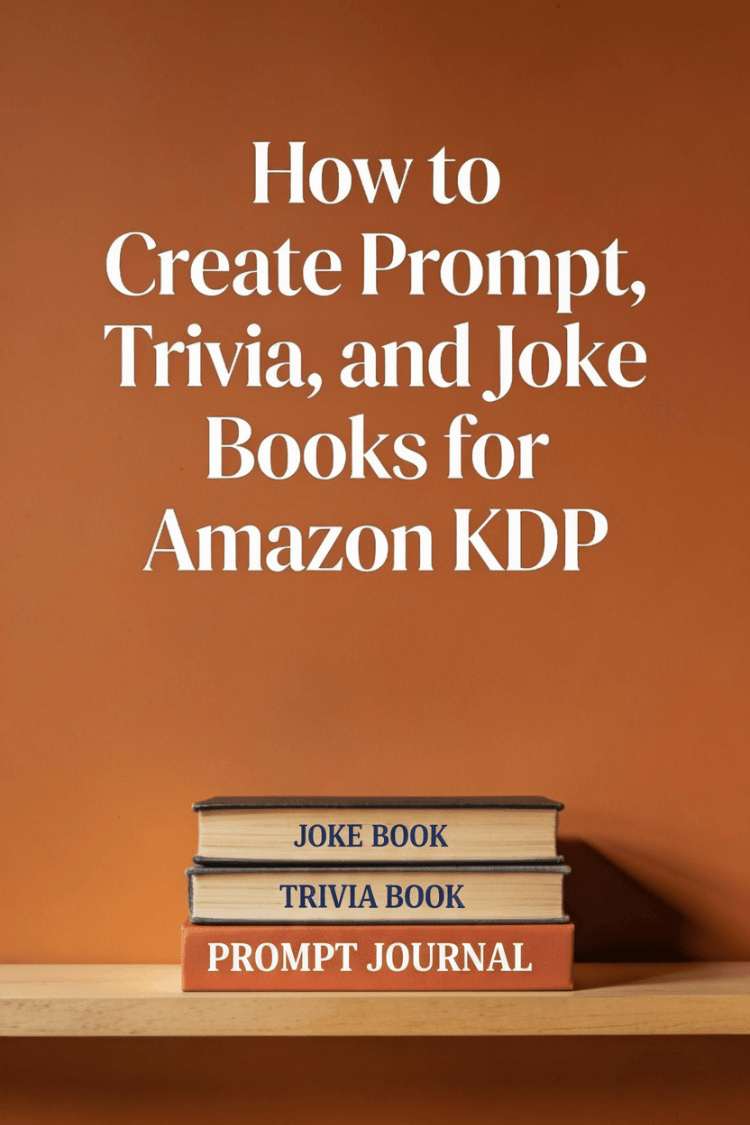
How to Create Prompt, Trivia, and Joke Books for Amazon KDP
Introduction
Amazon KDP is one of the easiest ways to publish books and reach readers worldwide. While competition is real, certain low- and medium-content book types continue to perform well because they provide clear value. Prompt books, trivia books, and joke books are especially popular, easy to create, and accessible even for beginners.
This guide explains what these books are, why they sell, and how you can create them efficiently using AI and Canva, as well as how to research trends and drive traffic to your books.
1. Prompt Books: Guided Journals That People Use

What they are:
Prompt books are structured journals that guide the reader with specific prompts or questions.
Unlike blank notebooks, they provide purpose and direction. Examples include:
Daily reflection or gratitude journals
Creativity prompts for writers or artists
Personal growth or mindfulness exercises
Why they sell:
People buy prompt books because they want structure, accountability, or inspiration. A journal that guides reflection or creativity is more valuable than a blank notebook because it helps the reader achieve a goal or improve a skill.
What to include:
Clear prompts or questions
Space for the reader to write
Instructions, examples, or tips
A visually appealing layout
Examples on Amazon:
2. Trivia Books: Learning Through Fun Questions
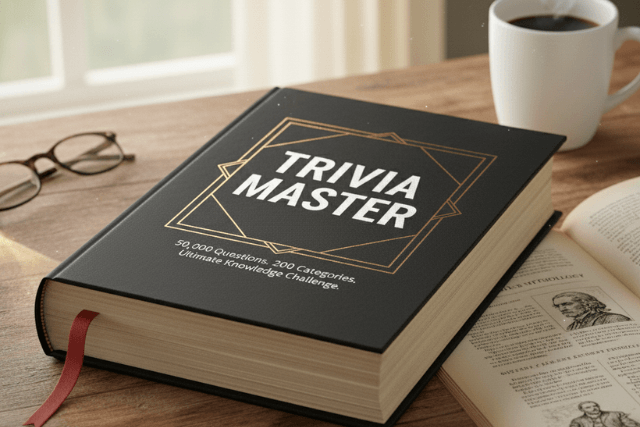
What they are:
Trivia books are collections of questions and answers on a specific topic. The questions can be multiple-choice, true/false, or open-ended. If you are not familiar with “trivia,” it simply means fun questions that test knowledge.
Examples include:
Pop culture trivia (movies, TV shows, music)
History, science, or geography trivia
Niche fandoms (sports, Bible studies, language challenges)
Why they sell:
Trivia books provide entertainment, learning, and social interaction. People use them for family game nights, parties, classrooms, or gifts. Books with a clear theme attract a specific audience and sell more consistently.
What to include:
Organized questions and answers
A clear theme or topic
Fun or challenging questions depending on your audience
Answer keys or explanations
Examples on Amazon:
3. Joke Books: Simple, Fun, and Highly Shareable
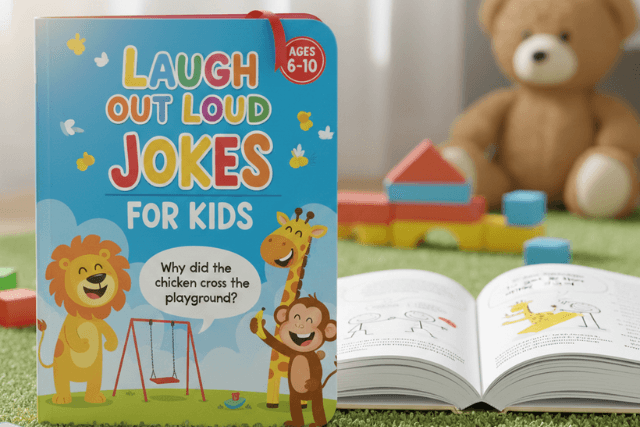
What they are:
Joke books are collections of jokes, puns, riddles, or funny one-liners. They can focus on general humor or niche topics like school, animals, work, or holiday themes.
Why they sell:
Joke books are easy to read, shareable, and often purchased as gifts. They don’t require heavy reading and provide quick entertainment for all ages.
What to include:
Clean, organized jokes (grouped by category if possible)
Easy-to-read formatting
Optional illustrations or visual elements to enhance humor
Examples on Amazon:
Researching Trends and Finding Profitable Niches
Before creating a book, it helps to see what’s selling and what people are searching for. Tools that can help include:
Book Ninja – spot trends and see what’s popular now, then create books based on these trends
Self-Publishing Titans – Self-Publishing Titans offers free and premium tools, including the Titans Pro Keyword Tool, to help you research niches, analyze competition, and grow your KDP publishing business
BookBolt – keyword research, competitor analysis, and book creation
These tools make it easier to choose a profitable niche and create content that buyers want.
How to Create These Books Easily with AI and Canva
Creating prompt, trivia, or joke books does not require starting from a blank page. With the right AI tools and a simple design workflow, you can move from idea to finished book much faster.
Step 1: Create the Content with Free AI Tools
AI can help you generate the bulk of your content quickly. You are still responsible for reviewing and refining it, but AI removes the pressure of starting from scratch.
You can use free versions of the following tools:
ChatGPT
Best for structured content and creative ideas.
Use ChatGPT to:
Generate daily or themed prompts for journals
Create trivia questions with answers
Write clean jokes, puns, or riddles
Rewrite or organize content into clear sections
This tool works well when you ask for specific formats, such as numbered lists or daily sequences.
Gemini
Best for fact-based content and research support.
Use Gemini to:
Create educational or factual trivia questions
Explore and expand topic ideas
Check whether a topic is broad enough for a full book
This is especially useful for trivia books where accuracy matters.
Claude
Best for clarity and longer explanations.
Use Claude to:
Write introduction pages
Create “How to use this book” sections
Improve the flow and readability of AI-generated drafts
Claude is helpful when you want your book to sound calm, clear, and well-structured.
Step 2: Match AI Content to the Book Type
Different book types need different kinds of structure.
Prompt books
Use AI to generate 30, 60, or 90 prompts around one theme
Group prompts by week, topic, or difficulty
Add short instructions or reflection tips
Trivia books
Use AI to generate questions and answers for one clear topic
Decide on a format (multiple choice, true/false, mixed)
Organize questions by category or difficulty level
Joke books
Use AI to generate jokes for a specific audience
Group jokes by theme or category
Keep humor clean and readable
Always review content for repetition, tone, and accuracy.
Sample Prompts for Creating Prompt Books
1. Gratitude Prompts Journal:
"Create a complete journal with 100 prompts focused on gratitude. Each prompt should encourage daily reflection on blessings, appreciation, and positive moments. Include a mix of questions, fill-in-the-blank statements, and short exercises that help the user notice and record things they are thankful for. Format each prompt as a standalone page, ready for publishing on Amazon KDP."
2. Writers’ Prompts Journal:
"Generate a full journal with 100 prompts specifically for writers. Include prompts that spark story ideas, character development, dialogue exercises, and creative writing challenges. Mix open-ended questions, ‘what if’ scenarios, and short writing exercises. Each prompt should be standalone and formatted for a ready-to-publish journal on Amazon KDP."
3. Creative Arts Journal (Doodling, Collaging, Painting, etc.):
"Create a complete journal with 100 prompts for creative arts practice, including doodling, collaging, painting, and mixed media. Each prompt should inspire a creative exercise, idea, or project that can be done on a single page. Include prompts that encourage experimentation, imagination, and artistic expression. Format each prompt as a page for a ready-to-publish Amazon KDP journal."
Sample Prompts for Creating Trivia Books
1. History Trivia Book:
"Create a complete trivia book with 200 questions and answers focused on history. Include a mix of world history, famous events, historical figures, and important dates. Vary the difficulty from easy to challenging. Format each question followed immediately by its answer, ready for publishing as a trivia book on Amazon KDP."
2. Pop Culture Trivia Book:
"Generate a full trivia book with 200 questions and answers about pop culture. Include movies, TV shows, music, celebrities, and viral trends. Mix easy, medium, and hard questions. Format each question with its answer, so it’s ready for a printable Amazon KDP trivia book."
3. Science & Nature Trivia Book:
"Write a complete trivia book with 200 questions and answers covering science, technology, animals, and nature. Include a range of question types and difficulty levels, from simple facts to challenging concepts. Format each question with its answer, ready for publication as a trivia book on Amazon KDP."
4. Sports Trivia Book:
"Create a full trivia book with 200 questions and answers focused on sports. Cover popular sports, athletes, records, championships, and historical events. Mix easy, medium, and hard questions. Format each question with its answer for a ready-to-publish Amazon KDP trivia book."
5. Mixed General Knowledge Trivia Book:
"Generate a complete trivia book with 200 questions and answers covering multiple topics such as geography, literature, history, pop culture, and science. Include a balance of difficulty levels. Each question should have its answer immediately following it, formatted for a ready-to-publish Amazon KDP trivia book."
Sample Prompts for Creating Joke Books
1. Kids’ Joke Book:
"Create a complete joke book with 200 clean and funny jokes suitable for children. Include a variety of types such as knock-knock jokes, puns, riddles, and short one-liners. Format each joke clearly and ensure they are age-appropriate and easy to read, ready for publishing as a joke book on Amazon KDP."
2. Animal Joke Book:
"Generate a full joke book with 200 jokes about animals. Include puns, funny scenarios, and kid-friendly humor. Each joke should be clear and self-contained, formatted for easy reading, and ready for publication on Amazon KDP."
3. Food & Drink Joke Book:
"Write a complete joke book with 200 jokes centered around food and drinks. Include puns, one-liners, and humorous questions and answers. Format each joke so it’s clear and engaging, ready for a printable joke book on Amazon KDP."
4. Dad Jokes Book:
"Create a full joke book with 200 classic dad jokes. Include puns, corny one-liners, and short humorous questions and answers. Format each joke clearly and concisely, ready for publishing on Amazon KDP."
5. Mixed Humor Joke Book:
"Generate a complete joke book with 200 jokes covering a mix of topics, including animals, food, school, and daily life. Include a variety of joke types—one-liners, puns, riddles, and knock-knock jokes. Format the jokes so each one is easy to read and ready for a KDP-ready printable joke book."
Step 3: Design the Book Interior in Canva
Once your content is ready, Canva makes formatting simple.
In Canva you can:
Choose a document size that matches KDP requirements
Use consistent fonts, spacing, and margins
Add writing lines or boxes for prompt books
Format trivia questions clearly with space for answers
Use playful layouts for joke books
Canva also allows you to design covers, which is important because covers strongly influence clicks and sales on Amazon.
Step 4: Choose the Right Book Size
Choosing a standard size helps with usability and printing.
Common sizes for these books include:
Prompt books: 6" x 9" or 7" x 10"
Trivia books: 6" x 9" or 8.5" x 11"
Joke books: 6" x 9"
Larger sizes work well if your book includes a lot of writing space or visual elements.
Step 5: Export and Upload to Amazon KDP
After formatting:
Export your interior as a print-ready PDF
Export your cover separately following KDP guidelines
Upload both files to Amazon KDP
Complete your title, subtitle, description, and keywords
Before publishing, preview the book carefully to check spacing, alignment, and readability.
A Simple Workflow to Remember
AI generates content
You review and refine
Canva formats the book
Amazon KDP publishes it
This workflow keeps book creation manageable and repeatable.
One Important Reminder
AI helps speed up the process, but it does not replace quality control. Always review content for accuracy, tone, repetition, and originality before uploading anything to Amazon KDP.
Driving Traffic to Your Books: Free and Paid Strategies
Even the best book won’t sell if no one sees it. Beyond optimizing your KDP listing with titles, subtitles, keywords, and categories, you can increase visibility through both free and paid strategies.
Free Methods
Facebook Groups
Join niche-focused groups and engage genuinely. Answer questions, share tips, and provide value. Mention your book only when it naturally fits the conversation.
Reels and TikTok Videos
Create short, engaging videos showcasing your book, trivia, or prompts. Use trending sounds and hashtags to reach a wider audience. Make content shareable and fun.
Threads and Text-Based Platforms
Share mini-lessons, behind-the-scenes writing stories, or trivia threads. Subtly link to your book while providing value.
Pinterest
Pin visually appealing content like quotes, sample pages, or graphics. Link pins directly to your Amazon page or a free resource that leads to your book. Use keywords for discoverability.
YouTube Videos
Make tutorial-style videos, read-aloud excerpts, or short lessons. Optimize titles, descriptions, and tags for search visibility. Include links to your book.
Collaborations and Guest Content
Partner with bloggers, authors, or influencers in your niche. Guest posts, interviews, or joint giveaways expose your book to new audiences.
Organic Social Media Sharing
Post consistently on your own accounts. Share behind-the-scenes content, mini-lessons, or interesting insights. Encourage followers to share your content.
Email Newsletters (Free Option)
Offer a freebie related to your book to grow your list. Share updates, tips, or excerpts to guide readers toward your book without spending on ads.
Paid Methods
Amazon Ads
Target keywords and audiences directly on Amazon to boost visibility, especially for new releases or niche topics.Social Media Ads
Platforms like Facebook, Instagram, and TikTok allow precise targeting. Promote your book to the most relevant audience for higher conversions.Email Marketing (Paid Options)
Invest in automation tools, audience segmentation, or paid ads to grow your email list faster and reach potential readers with tailored campaigns.
Conclusion
Prompt, trivia, and joke books are strong, evergreen niches on Amazon KDP. They provide interactive, entertaining, or inspiring value that readers continue to seek.
Using AI and Canva can simplify content creation, and research tools like Book Ninja, Self-Publishing Titans, and BookBolt can help you find profitable ideas. Paid ads or promotions can further increase visibility and sales.
These books are not just products - they are tools that readers enjoy and share. For self-publishers willing to combine strategy with creativity, these niches remain accessible, beginner-friendly, and profitable.
Thank you for reading this blog post. Please share it.
To stay inspired and get even more helpful tips and resources, make sure to:
Explore More – Check out the blog, digital products, and top affiliate recommendations to help you on your creative journey.
About Simple Creative Projects
Simple Creative Projects helps you turn simple creative projects into multiple online income streams using creative digital products, self-publishing low/medium-content books, and Affiliate Marketing in the creative niche. The focus is on practical steps, free and affordable resources, and building multiple income streams without overwhelm or complicated systems.
Free Gifts For Your Online Business
Find a collection of free and paid resources for Affiliate Marketing, Digital Products, and Self-Publishing here:
Get Free Digital Product Resources when you sign up for my newsletter!
Get my BEST updates delivered to your inbox. Join my email list and get my favorite content regularly. Unsubscribe anytime.
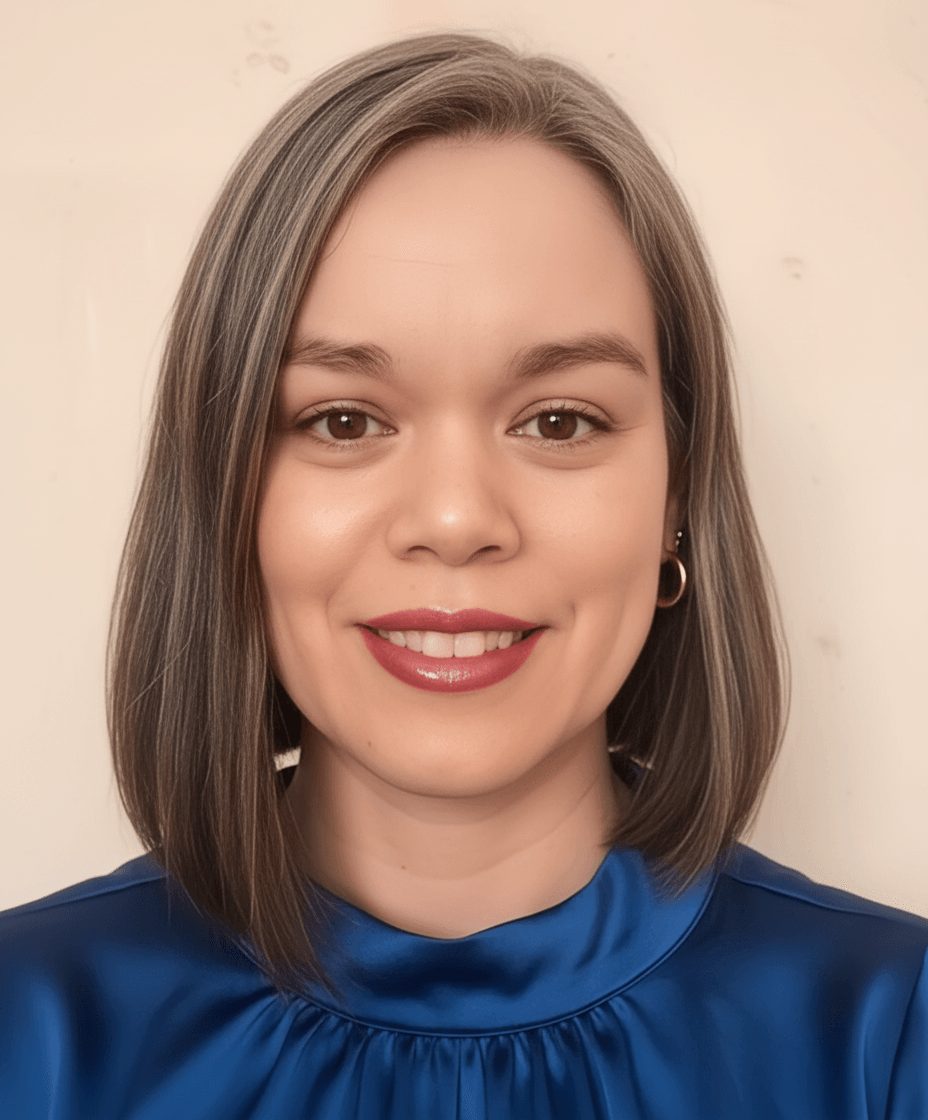
Hello, I'm Janet.
I’m a disciple and servant of Jesus Christ, helping people with limited resources and challenging circumstances turn simple creative projects into multiple online income streams through creative digital products, self-publishing low/medium-content books, and Affiliate Marketing in the creative niche. I’m also a wife, mom, teacher, author, Christian Life Coach, and creative entrepreneur.