Turn Simple Creative Projects Into Multiple Online Income Streams With Free And Affordable Resources
This site includes links from a number of different affiliate programs. When you click on a link and make a purchase, we may earn a commission.
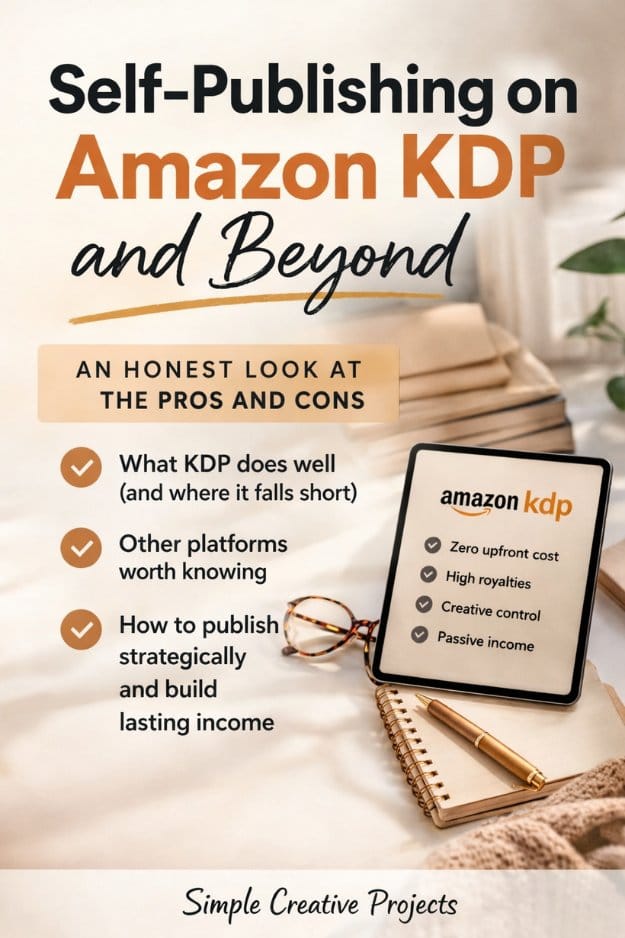
Self-Publishing on Amazon KDP: Is It Worth It? (Honest Pros and Cons)
There is a reason so many creators are drawn to self-publishing. The barriers are low, the royalties are real, and the idea of turning what you know into a book - or a printable workbook, or a journal - is genuinely exciting. Amazon KDP made that dream accessible for millions of people. But like any income stream, it comes with some pros and cons and rules you have to be aware of.
Here is what you need to know.
What Is KDP - and What Else Is Out There?

Amazon KDP (Kindle Direct Publishing) is the most well-known self-publishing platform. You can publish eBooks and print-on-demand paperbacks for free, set your own price, and earn royalties without touching inventory.
But Amazon isn't the only option. Other platforms worth knowing:
Publish Direct:
Apple Books for Authors — publish directly to Apple's global ecosystem; reaches iPhone and iPad users worldwide
Google Play Books Partner Center — sell directly through Google's store, available in 75+ countries
Barnes & Noble Press — B&N's own self-publishing portal for eBooks and print; reaches one of the largest US book retailers directly
Kobo Writing Life — Kobo's direct publishing platform with strong reach in Canada, Europe, and Australia
Draft2Digital — if you'd rather manage one dashboard instead of four, D2D distributes to Apple Books, Barnes & Noble, Kobo, libraries, and more simultaneously
IngramSpark — better for wider bookstore and library distribution, more professional print options
Lulu — good for journals, workbooks, and specialty print formats
Sell Direct (No Marketplace):
Beacons / Stan Store / Fourthwall / Whop — sell PDFs, digital workbooks, and printables directly to your audience; these platforms also allow MRR and PLR content
Gumroad / Payhip — solid platforms for selling your own original digital products, but neither allows PLR or MRR content, so check their terms before uploading anything you didn't create from scratch
Publishing direct on each major platform gives you full control over pricing and metadata. Using a distributor like Draft2Digital saves time but may reduce your royalty rate slightly. Many creators do both - publish direct on the platforms that matter most to their audience, and use a distributor for the rest.
Each platform has its own royalty structure, print quality, and reach. Most creators start with KDP and expand from there.
The Pros
Zero Upfront Cost
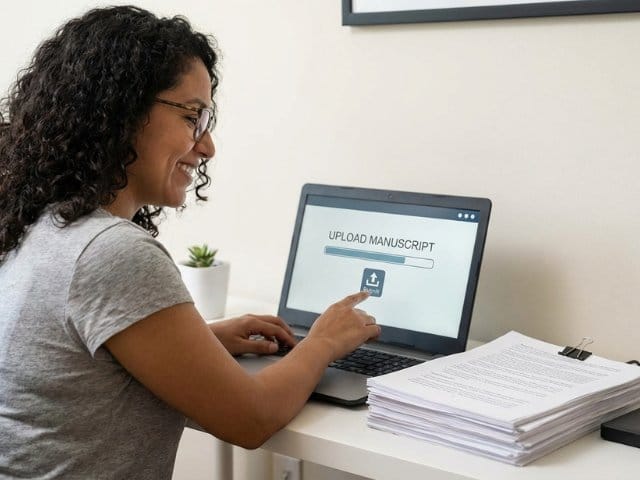
Publishing on KDP costs nothing. You upload your manuscript, design or upload a cover, fill in the metadata, and your book is live - sometimes within 72 hours. No agents, no publishers, no gatekeepers. That alone is remarkable.
High Royalty Rates
KDP offers up to 70% royalties on eBooks priced between $2.99–$9.99. Compare that to traditional publishing, where authors typically earn 10–15% on print and 25% on digital. For a self-published creator with an audience, those numbers add up fast.
Speed to Market
A traditionally published book can take two years from accepted manuscript to bookshelf. Self-publishing can get your work in front of readers within days. For timely topics, seasonal content, or fast-moving niches, speed matters.
Full Creative Control
You decide the title, cover, interior layout, pricing, and positioning. No editorial committee asking you to soften your message or change your target audience. Your book looks and sounds the way you intended.
Passive Income Potential
Once published, a book keeps earning without additional work on your part. Evergreen content - Bible study guides, workbooks, skill-based tutorials, niche how-to books - can generate royalties for years.
Low-Content Books Are a Real Opportunity
Journals, planners, notebooks, coloring books, and log books require minimal writing. These low-content and no-content formats have their own market on Amazon, and creators with a design eye can produce multiple titles quickly using tools like Canva or InDesign.
Print-on-Demand Means No Inventory Risk
KDP prints books only when someone orders them. No warehouse, no upfront print run, no boxes in your living room. This is a significant advantage for small creators operating on tight margins.
The Cons

Amazon's Algorithm Is the Gatekeeper
Publishing on KDP is free. Getting discovered on KDP is another matter entirely. Amazon's search algorithm favors books with strong sales history, reviews, and keyword optimization. A new title with no reviews and no marketing budget can sit invisible for months - or indefinitely.
Low Royalties on Print Books
The 70% royalty applies to eBooks. For print-on-demand paperbacks, KDP takes a significant cut for printing costs, and the royalties are much lower - often 30–60% depending on pricing and trim size. Price too low, and you barely break even. Price too high, and readers skip you for a cheaper option.
KDP Select Exclusivity
To enroll in Kindle Unlimited (KU) - which can boost visibility and income - you must give Amazon 90-day exclusivity on your eBook. That means you can't sell it anywhere else during that period. For creators building a diversified income across platforms, this is a real constraint.
Cover and Interior Quality Are Your Responsibility
The market is flooded. Readers judge books by their covers - always have, always will. A poorly designed cover tanks sales regardless of how good the content is. You either learn design, hire it out, or use templates. None of those options is automatic.
Competition Is Intense
Any niche that's profitable has competition. Low-content publishing especially has become saturated in some categories. Finding a sub-niche with demand and lower competition requires research, not guesswork.
Reviews Are Hard to Get
Amazon's review ecosystem is strict. You can't incentivize reviews. You can't email buyers directly. Building a legitimate review count is slow - but reviews are essential for conversions. Expect a long runway before social proof catches up with your effort.
Royalties Are Paid on a Delay
KDP pays approximately 60 days after the end of the sales month. If you publish in January and make sales, you will see payment in late March or April. For anyone counting on cash flow, that delay matters.
PLR and MRR Content Is Not Welcome As-Is
This one catches a lot of people off guard. If you have purchased PLR (Private Label Rights) or MRR (Master Resell Rights) content - ready-made books, workbooks, or courses you are licensed to resell - you cannot simply upload that content to Amazon KDP and publish it as your own book. Amazon explicitly prohibits content that has been published elsewhere or is not original to the author. Submitting PLR content unchanged is a fast track to account suspension.
To publish PLR or MRR content on KDP, it must be substantially transformed: rewritten in your own voice, restructured, expanded with original material, and made genuinely distinct from the source. The rule of thumb is that it should read like a completely new book because for KDP's purposes, it needs to be one.
If you are not willing to put in that editing work, platforms like Beacons, Stan Store, Fourthwall or Whop are better homes for resell-rights content - these allow MRR and PLR products. Note that Payhip and Gumroad also restrict this type of content, so always check a platform's terms before uploading content you didn't originally create.
Platform Dependency
Your publishing business lives on someone else's platform. Amazon changes its algorithms, royalty structures, and policies - and sellers have little recourse. Diversifying across multiple platforms reduces this risk, but never eliminates it.
How to Approach It Strategically
Self-publishing works best as part of a larger ecosystem - not as a standalone income hope. A few principles that apply:
Validate before you publish. Research the category. Check the competition. Look at what's selling and what's not. A bestselling book in your niche tells you the market exists. Your job is to serve it better or differently.
Build your own list. Amazon readers are Amazon's customers, not yours. You can't contact them, remarket to them, or build a relationship with them through the platform. A simple email list tied to a lead magnet changes that equation entirely.
Think in series or systems. A single book is a starting point. A companion workbook, a journal, a course, an audio version - each additional format multiplies the value of the core content you've already created.
Treat the back matter as real estate. The back pages of your book are free marketing space. Use them: link to your website, your email list, your other books, your digital products. Readers who finish your book are warm - don't let them go without a next step.
The Bottom Line
Self-publishing on Amazon KDP is a legitimate income stream with real advantages - especially for creators who already have knowledge worth sharing and content worth building. It's not a get-rich-quick path. It rewards patience, consistency, and a willingness to learn both craft and marketing.
The question isn't really whether self-publishing works. The question is whether you're willing to treat it like a business.
If the answer is yes, the tools are there and the opportunity is real.
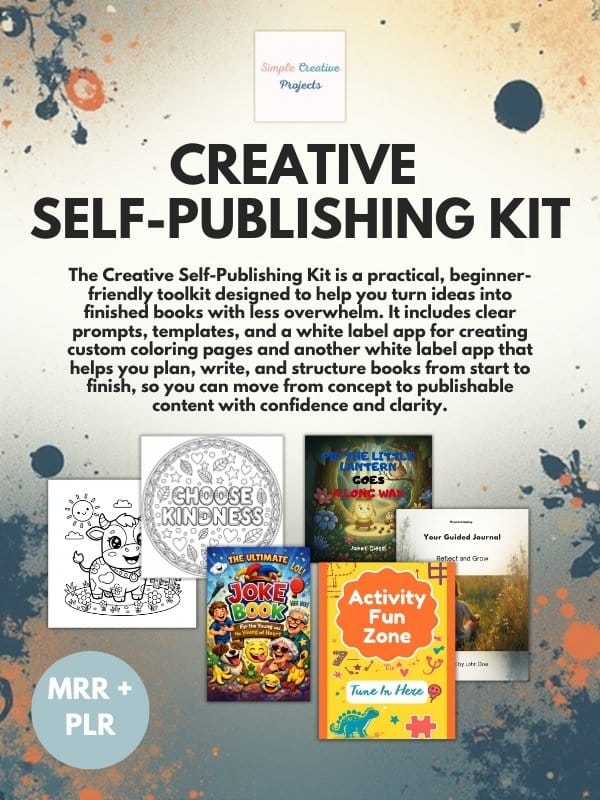
Ready to stop waiting and start publishing? The Creative Self-Publishing Kit gives you everything to get started - templates for journals, activity books, children's stories, and more, plus two white label apps with resell rights. Grab it for just $7 and start building your publishing income today.
Thank you for reading this post. Please share it.
To stay inspired and get even more helpful tips and resources, make sure to:
Explore More – Check out the blog, digital products, and top affiliate recommendations to help you on your creative journey.
About Simple Creative Projects
Simple Creative Projects helps you turn simple creative projects into multiple online income streams using creative digital products, self-publishing low/medium-content books, and Affiliate Marketing in the creative niche. The focus is on practical steps, free and affordable resources, and building multiple income streams without overwhelm or complicated systems.
Free Gifts For Your Online Business
Find a collection of free and paid resources for Affiliate Marketing, Digital Products, and Self-Publishing here:
Get Free Digital Product Resources when you sign up for my newsletter!
Get my BEST updates delivered to your inbox. Join my email list and get my favorite content regularly. Unsubscribe anytime.

Hello, I'm Janet.
I’m a disciple and servant of Jesus Christ, helping people with limited resources and challenging circumstances turn simple creative projects into multiple online income streams through creative digital products, self-publishing low/medium-content books, and Affiliate Marketing in the creative niche. I’m also a wife, mom, teacher, author, Christian Life Coach, and creative entrepreneur.